

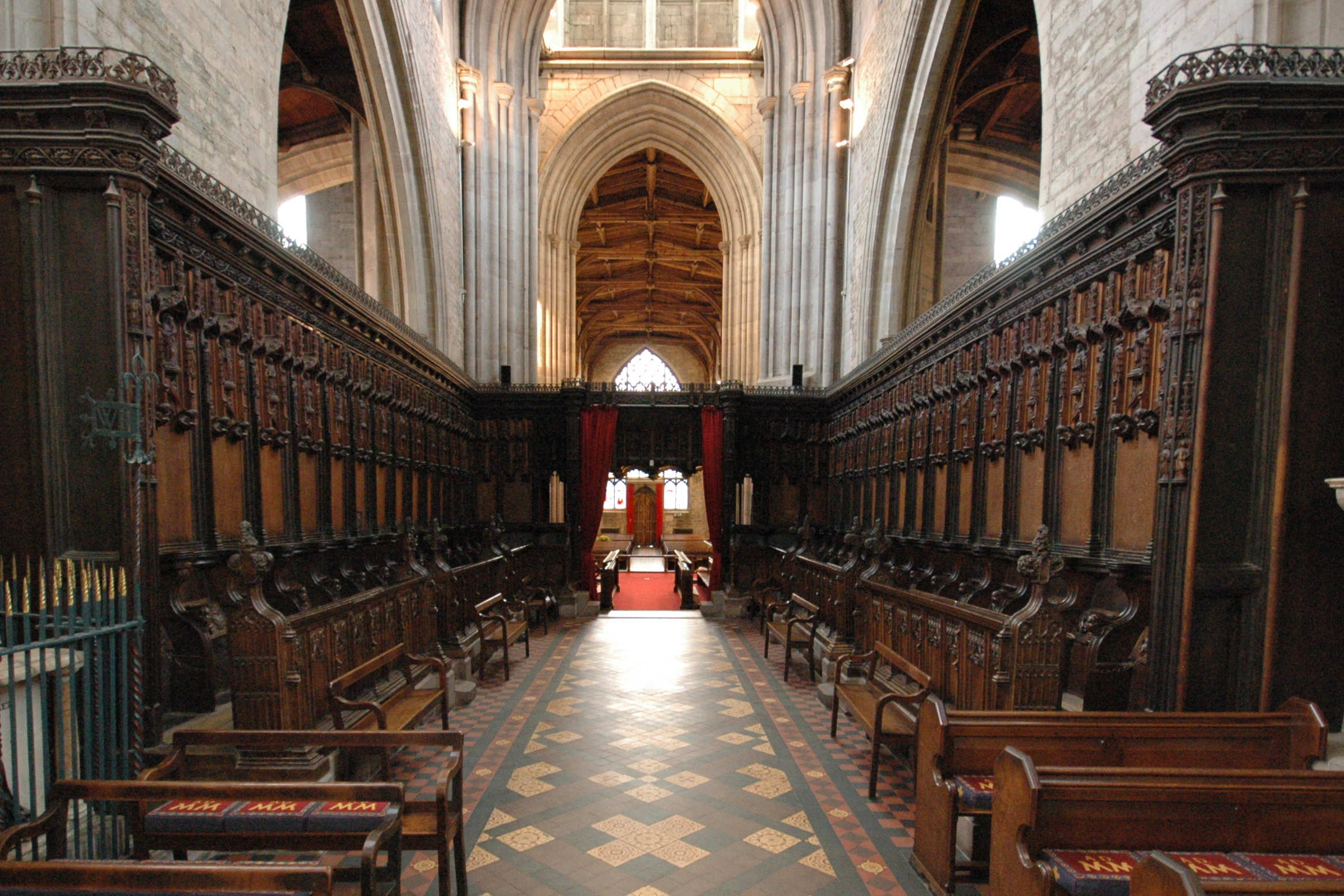
The stalls were for use during the mass and were designed with seats that tipped up with a ledge to support a weary worshipper who had stood for too long. The carved brackets under the ledges are called misericords.
The stalls were constructed in two phases. The stalls on the north side date from about 1425 and were made for the chancel before the major remodelling of the church 1433-50. The sixteen stalls were in two sets of eight facing each other across the chancel in the usual fashion.
In 1447 120 planks of 'waynscotbord' were purchased in Bristol for an extended installation. The earlier stalls from the south side were joined to the northern ones to make a range of 16, and were copied on the south side with a new range and with cross-stalls at the west end in the monastic style. There are sufficient stylistic differences to be able to distinguish the two phases, for example in the angels carved on the arm-rests.
Up to cornice level the stalls are original but the original canopies were removed in the Reformation and were reinstalled in several phases in the 19th Century.
Most of the bench-end finials are of carved foliage, some with niches where saintly figures may once have stood. Four of them are more elaborately carved with a Pietà; St Peter and St John the Baptist; a ‘boy bishop’ and the Lord of Misrule — the traditional leaders of mid-winter festivities; and a wyvern.